
Notarize From Your Couch: How Online Notarization Works and How a Florida Remote Online Notary Can Help You Anywhere in the World

Notarize From Your Couch: How Online Notarization Works and How a Florida Remote Online Notary Can Help You Anywhere in the World
As a remote worker or digital nomad, you thrive on flexibility and freedom. But dealing with traditional bureaucratic processes, like getting documents notarized, can feel like a major roadblock. Imagine being in Bali and needing to finalize a real estate deal back home, or securing a loan while hopping between co-working spaces in Europe. The traditional notary process, with its in-person requirements, can be a logistical nightmare.
Thankfully, there's a solution that aligns with your lifestyle:remote online notarization (RON). This innovative approach allows you to get your important documents notarized from virtually anywhere in the world, using just a computer, a webcam, and a secure internet connection. And if you're looking for a reliable partner, aFlorida remote online notarycan be your key to unlocking seamless document authentication, no matter where your adventures take you.
This post will demystify online notarization, explaining what it is, how it works, the types of documents eligible, and the benefits of using this convenient service. We'll also include a step-by-step guide to the online notarization process and explore why Florida's RON framework is particularly advantageous for international remote workers.
Understanding Remote Online Notarization in the Digital Age
What Remote Online Notarization Is and Why It Matters

Remote online notarization (RON) is a game-changer for the modern workforce. It's a process that allows a notary public to perform notarization services for documents over the internet using secure audio-visual technology. This means you and the notary can interact in real-time, regardless of your physical locations. Think of it as a virtual notary public, accessible from your laptop or tablet.
Unlike traditional notarization, which requires both parties to be physically present in the same room, RON leverages video conferencing, electronic signatures, and advanced identity verification systems to accomplish the same legal function with greater convenience and accessibility. [2, 3]
For remote workers and digital nomads, RON eliminates geographical barriers that previously made document notarization logistically challenging or practically impossible. Imagine a freelancer working from Southeast Asia, a consultant traveling across Europe, or a corporate employee based in multiple countries. All can now authenticate critical documents without returning to their home state or country.
The Historical Evolution and Regulatory Recognition
The journey of RON from experimental innovation to mainstream service is remarkable. Virginia pioneered RON as early as 2012, demonstrating early confidence in the technology's security and legal validity. [3] However, the real acceleration came during and after the COVID-19 pandemic. According to the National Notary Association, remote online notarizations increased by an extraordinary 547 percent between 2019 and 2021, reflecting the surge in demand during the pandemic. [6]
The federal government has also recognized the importance of establishing nationwide standards with the proposed SECURE Notarization Act, which aims to establish uniform protocols across all fifty states. [9] As of February 2026, forty-five states and the District of Columbia have enacted permanent RON laws, representing near-universal adoption across the country. [7] This regulatory acceptance, combined with technological maturity and proven market demand, has transformed RON from an emergency measure into an established industry standard.
The Explosive Growth of Online Notarization Market
Market Size, Projections, and Growth Trajectories
The online notarization market has entered an explosive growth phase. The market reached approximately two billion dollars by 2025, with projections indicating expansion to reach between 6.1 billion dollars by 2033. [1, 5] Market research firms estimate the compound annual growth rate for the RON market to be between fifteen percent and eighteen point five percent through 2033. [1, 2]
Within just six months of one organization launching a remote online notarization service, the platform experienced a remarkable increase in market share, capturing twenty-five percent of the newly emerging online notarization sector in its pilot region. [2] Furthermore, efficiency metrics improved dramatically, with the time taken to complete a notarization dropping by seventy percent. [2]
Key Market Drivers and Industry Expansion Factors
Several factors are propelling the growth of RON beyond its pandemic-driven origin:
The widespread adoption of digital signatures and electronic document management systems. [1]
The proliferation of remote work and distributed business operations. [1]
Evolving regulatory frameworks and technological innovations. [1]
The real estate and financial services industries have emerged as particular growth engines for RON adoption. These sectors have discovered that RON streamlines operations while reducing costs and improving customer experience. Beyond real estate, RON is expanding into legal services, healthcare, government transactions, and fintech applications. [1, 2]
Regional Adoption Patterns and Geographic Leadership
North America is leading global implementation, setting the standards that other regions are beginning to follow. The United States market dominates globally, with forty-five states and the District of Columbia having enacted permanent RON legislation as of February 2026. [7]
In Asia-Pacific regions, remote notarization is feasible but more heavily regulated. [3] Singapore's RON pilots integrate with national digital identity systems, enabling seamless notarization for e-commerce transactions. [3] China's framework supports digital notarization via approved platforms but imposes stringent onshore data residency requirements. [3] India's IT Act 2000 allows certifying authorities to issue digital signatures, with remote options emerging through Aadhaar-linked video verification systems. [3]
How Remote Online Notarization Works: The Complete Process
Identity Verification: The Foundation of Digital Trust
The identity verification process is the critical foundation upon which all RON depends. It typically includes three distinct components:
Remote ID Presentation:Showing a government-issued identification document to the notary on camera.
Credential Analysis:Using an automated process to verify the security elements and information on the identification document. For example, a Florida notary using an approved RON platform might use audio-video feeds to verify a signer's driver's license against a database, ensuring the digital signature is notarized equivalently to a physical one. [3]
Knowledge-Based Authentication (KBA):Answering a series of computer-generated questions based on your personal history, credit information, and financial data. In many states, you must correctly answer a specified percentage of questions within a limited time window. For example, in Utah, a signer must correctly answer a minimum of four out of five knowledge-based authentication questions (an eighty percent accuracy threshold) in under two minutes.
The Live Video Session: Real-Time Interaction and Document Review
Once identity verification is complete, you and the notary proceed to a live, secure, audio-visual session. During this session, the notary guides you through the notarization process and verifies that you understand the document and are willing to sign it. [7] Florida law requires that online notaries confirm the identity of each signer through the notary's personal knowledge of them, or by documenting all of the requirements mentioned above. [8]
Electronic Signatures, Seals, and Tamper-Evidence Technology
After you electronically sign the document, the notary applies their electronic signature and notary seal. All RONs must employ tamper-evident technology that displays evidence of any alteration to the document after completion of the notarization. [7] This is typically accomplished through digital certificates that use encryption technology. [10]
Record Keeping and Document Storage: Compliance and Accessibility
Following the notarization, the notary is required by law to create and retain both an audio-visual recording of the notarization session and a secure electronic journal entry documenting the transaction. Florida law requires that an online notary public create an audio-video recording of the remote signing and notarial procedure and keep that recording for at least ten years. [8]
Technology Powering Modern Online Notarization
Multi-Layered Security Frameworks and Encryption Protocols
Modern RON platforms employ multiple overlapping security technologies to protect sensitive information and ensure the integrity of notarized documents. These include:
Comprehensive data encryption, with online notarization services implementing advanced encryption standards including two hundred fifty-six bit encryption for all data transmission and storage.
TLS 1.3 (Transport Layer Security version 1.3) for secure internet communication.
Multi-factor authentication for both notaries and signers.
Access control measures including role-based permissions.
Session timeout protocols.
Geolocation verification.
Device fingerprinting.
Artificial Intelligence and Machine Learning for Fraud Detection
The integration of artificial intelligence and machine learning into RON platforms has enhanced the ability to detect and prevent fraud. AI systems learn from historical fraud patterns and legitimate transactions, allowing them to continuously improve their detection accuracy over time.
AI-powered identity verification systems now employ sophisticated matching algorithms that compare facial features captured in real-time during the video session with the face visible in government-issued identification documents. Document analysis algorithms examine notarized documents for suspicious patterns. Behavioral analysis systems can detect signs of duress or coercion during video sessions.
Emerging Technologies: Blockchain, Biometrics, and Digital Identity
Emerging technologies are beginning to reshape the notarization landscape. Blockchain technology offers unique advantages by creating immutable records of notarized documents. Biometric authentication technologies are becoming increasingly sophisticated, including voice recognition, behavioral biometrics, liveness detection, and continuous authentication. [2]
The Regulatory Landscape: Understanding Where RON is Legal and How Requirements Vary
Federal Standards and the SECURE Notarization Act
While the United States does not yet have comprehensive federal legislation governing RON, the proposed SECURE Notarization Act represents the direction federal policy is moving. [9] This proposed legislation aims to establish uniform national standards that would allow any notary commissioned in any state to perform RON services. [9]
State-by-State Implementation Variations and Compliance Requirements
As of February 2026, forty-five states and the District of Columbia have enacted permanent RON legislation. [7] However, substantial variations exist in how different states regulate RON. These variations encompass acceptable identity verification methods, required recording and record retention procedures, permissible document types, and technology requirements, among others.
Florida's Progressive Framework and Advantages for International Work
Florida has emerged as a leader in RON implementation and stands out as particularly advantageous for remote workers and digital nomads seeking to notarize documents from anywhere in the world. Remote online notarization in Florida has operated since January 2020. [8]
Florida law specifies clear requirements for remote online notarization that balance consumer protection with accessibility and convenience. Notaries in Florida performing remote online notarizations are required to take a two-hour course specifically on RON and Florida's specifics on RON transactions, and must register as an online notary public with the state before the first RON transaction can take place. [8] During RON transactions in Florida, the notary must be physically present in the state when performing the notarial act, ensuring consistent jurisdiction and regulatory oversight. [8] However, notably, the signer can execute the RON transaction from anywhere within the United States, and under certain conditions, from anywhere in the world. [8]
Notarizing Documents From Anywhere in the World: International Considerations
Can You Notarize Documents Internationally and Have Them Recognized Globally?
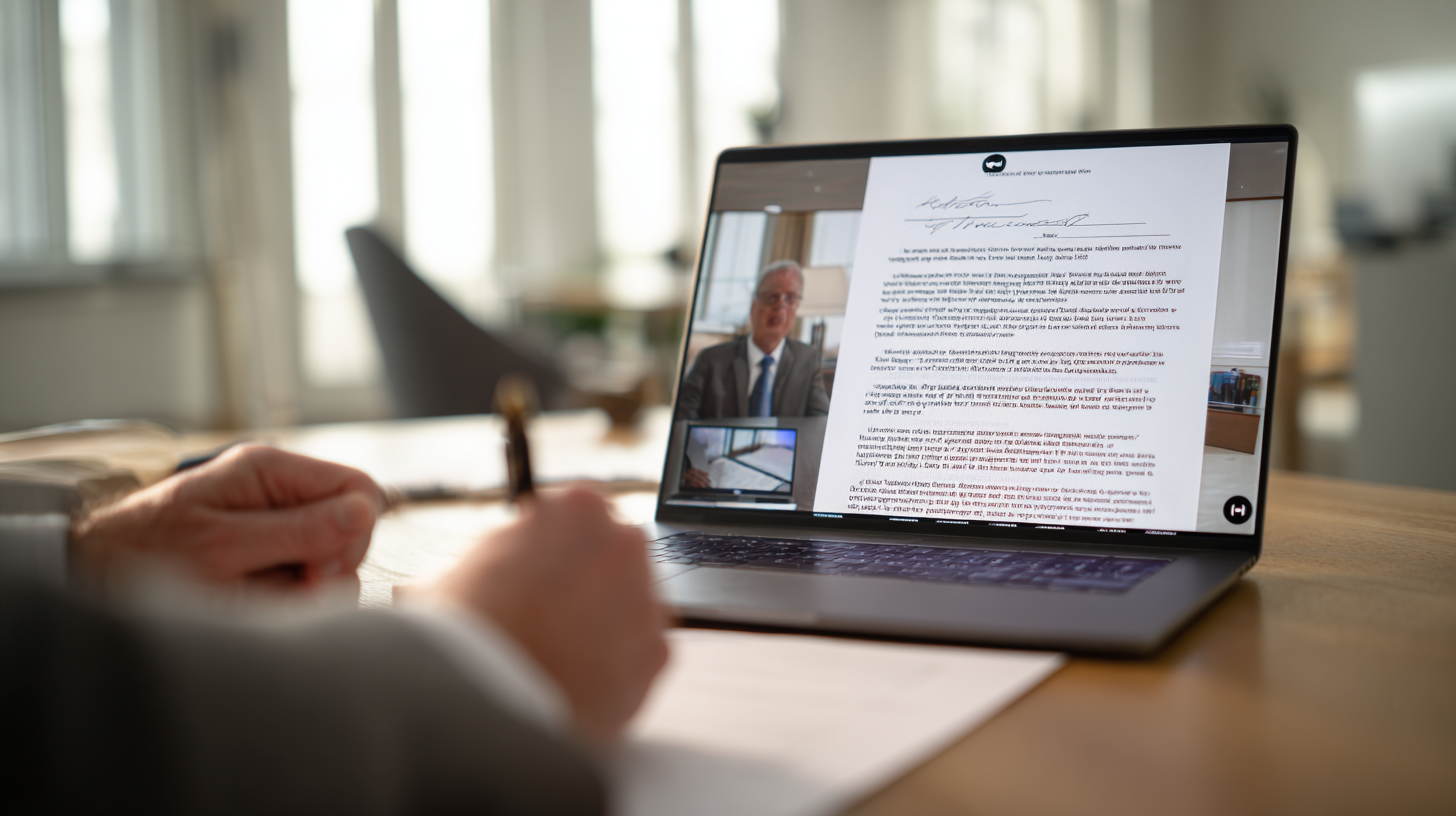
Documents notarized online by U.S. notaries are generally valid and enforceable within the United States. However, international recognition of U.S. notarizations is more complex and depends on whether the document will be used in a country that is part of the Hague Convention Apostille system and whether the foreign jurisdiction accepts documents notarized through RON.
For documents intended for use in countries that are part of the 1961 Hague Convention Treaty (also known as the Apostille Convention), additional steps beyond simple notarization are required to ensure recognition. An apostille certificate is a specific form of authentication for documents that will be used in countries that are part of the 1961 Hague Convention Treaty.
Which Documents Can Be Notarized Internationally and Recognition Challenges
Powers of attorney, real estate transaction documents, affidavits, parental consent forms, business agreements, and many other common documents can be notarized internationally. However, certain document types may not be acceptable for remote notarization in all jurisdictions, and some foreign jurisdictions impose restrictions on documents.
Ready to Notarize From Your Couch?
Remote online notarization is revolutionizing the way documents are authenticated, offering unparalleled convenience and accessibility for remote workers and digital nomads. With its progressive legal framework and experienced notaries, Florida is a leading state for providing international RON services.
Take action today! Find a commissioned Florida notary public to notarize your documents online. Contact a Florida Remote Online Notary today and experience the freedom of notarizing from anywhere in the world.
Sources and References
https://www.datainsightsmarket.com/reports/online-notary-service-1982248
https://www.openpr.com/news/4112571/remote-online-notary-service-market-cagr-18-5-trends-with
https://www.esignglobal.com/blog/can-notary-public-notarize-digital-signature-remotely-ron
https://www.proof.com/blog/get-to-know-the-top-10-remote-online-notarization-platforms-in-2025
https://www.datainsightsmarket.com/reports/remote-online-notary-service-1985708
https://www.notarycam.com/remote-online-notary-laws-which-states-allow-online-notarization-in-2025/
Sources
[1]https://www.datainsightsmarket.com/reports/online-notary-service-1982248
[2]https://www.openpr.com/news/4112571/remote-online-notary-service-market-cagr-18-5-trends-with
[3]https://www.esignglobal.com/blog/can-notary-public-notarize-digital-signature-remotely-ron
[4]https://www.proof.com/blog/get-to-know-the-top-10-remote-online-notarization-platforms-in-2025
[5]https://www.datainsightsmarket.com/reports/remote-online-notary-service-1985708
[6]https://gitlab.cci.drexel.edu/-/snippets/101
[7]https://www.notarycam.com/remote-online-notary-laws-which-states-allow-online-notarization-in-2025/
[8]https://blog.stavvy.com/ron-florida